


KOCOWA+: K-Drama, K-Pop & TV
wavve Americas, Inc.
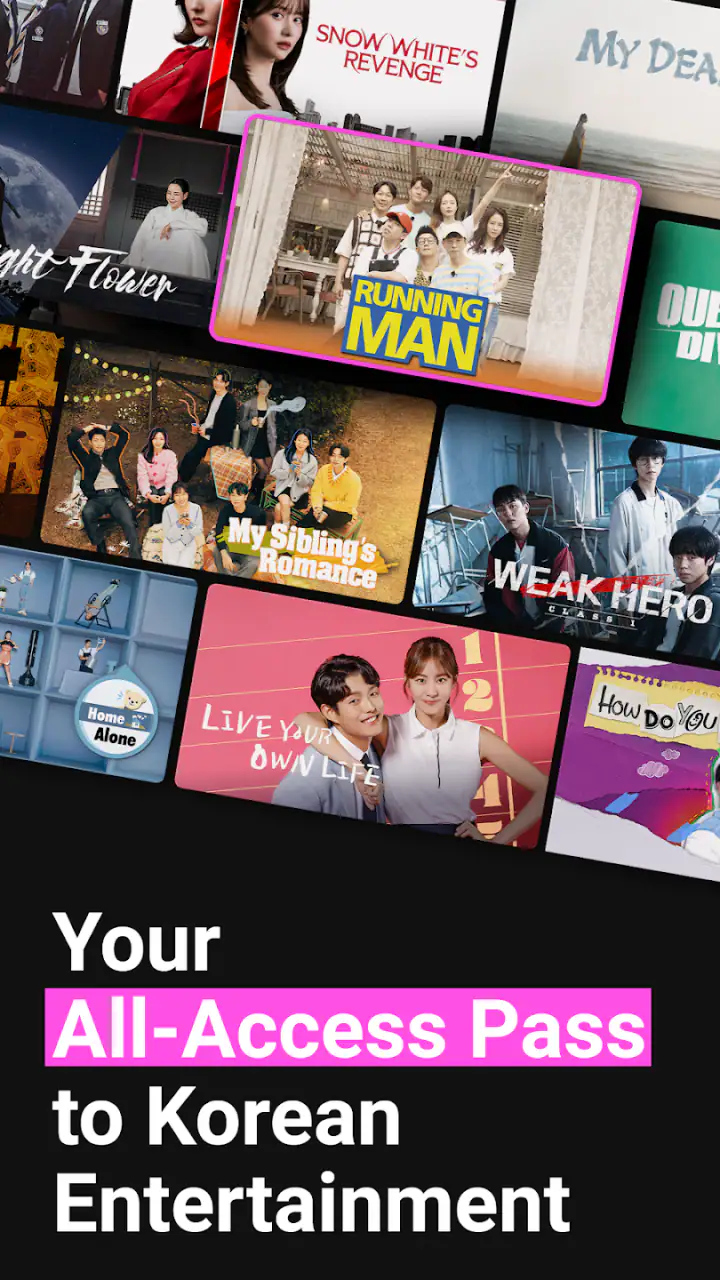
I came away from KOCOWA+ thinking of it as a focused entertainment app rather than a general streaming replacement. Its purpose is clear: it brings Korean dramas, Korean pop culture, and television content into one place, with a free download and optional in-app purchases. I tested it as someone who might open an app after work, search for a particular Korean series, and settle in for an episode rather than browse endlessly through every kind of video.
That focus is its biggest strength. If Korean entertainment is already part of your viewing routine, the app feels more relevant than a broad service where you have to dig through unrelated films and shows. If you only occasionally watch Korean content, the value depends more heavily on whether the particular programs you want are available under the access option you choose. I would not install it expecting a universal replacement for every streaming service.
How KOCOWA+ feels to use across different needs and situations
Readable navigation for finding something to watch
The first thing I look for in an entertainment app is whether I can move from opening the app to watching something without unnecessary confusion. KOCOWA+ benefits from having a narrow identity. The name, the Korean entertainment focus, and the app’s presentation point in the same direction, so I am not left wondering what kind of catalog I am exploring.
That clarity matters for people who find crowded interfaces tiring. A general streaming app may place Korean dramas beside documentaries, children’s programs, live channels, and unrelated recommendations. Here, the browsing task is more specific: I am looking for a drama, a variety program, or music-related television content from the Korean entertainment world. That reduces the mental work involved in deciding where to begin.
Search is especially important for viewers who already know the title or performer they want. In that situation, I prefer typing a direct query instead of scanning rows of recommendations. It is also a useful approach when browsing with a family member or friend who has a very specific request. Rather than making them wait while I explore, I can start with their title and then check whether the result is suitable.
Related News

Why WhatsApp Messenger Still Makes Everyday Communication Feel Easy

Jurassic World: The Game Is the Better Dino Tycoon for Strategic Players

Threads in Real Life: Who Should Join, Lurk, or Leave

How SHEIN Turned Shopping Into an Endless Content Feed

How to Make Fortnite Feel Smarter on Mobile

Should You Switch to Microsoft Outlook on Mobile?
For viewers with reading difficulties, the practical experience will depend on how comfortable they are with names, episode labels, and subtitle-heavy viewing. Korean titles and performer names can be unfamiliar to new viewers, so browsing may take longer than it does in a catalog built around content they already recognize. I found that saving a short list of intended programs mentally, or writing down the title before searching, is more efficient than relying on vague category browsing.
The app is available for Android devices running at least version 8.0, which makes it usable on a range of older phones and tablets rather than only recent hardware. That does not guarantee identical performance on every device, but it lowers the entry barrier for viewers who have not upgraded recently. The current version is 4.1.3, so keeping the app updated is sensible when navigation or playback behaves unexpectedly.
One useful habit is to separate discovery from viewing. I browse when I have time, identify a series or program that genuinely interests me, and then return later when I want to watch. This is less tiring than making a viewing decision while already distracted. It also helps people who become overwhelmed by long content rows or who need extra time to read descriptions.
Gallery
Text, sound, and sensory comfort during playback
For many Korean shows, subtitles are not an optional extra for English-speaking viewers; they are central to understanding the dialogue. That makes subtitle readability more important here than it might be in a typical English-language television app. I recommend checking the first few minutes of a program before committing to a long viewing session. If the text feels too small, too fast, or difficult to distinguish from the image behind it, the problem will become more noticeable over time.
Subtitle-based viewing can work well for people who prefer reading to processing spoken conversation, but it can also create a heavy split between visual attention and story action. A viewer may need to read a line while also following facial expressions, movement, or on-screen captions. For that reason, I would be cautious about recommending fast-paced variety content to someone who finds simultaneous reading and visual tracking difficult. A slower drama may be easier to follow, especially when watched in a quiet setting.
Sound is another consideration. A person with reduced hearing may rely heavily on subtitles, while someone sensitive to sudden volume changes may prefer to control the device volume carefully before playback begins. I avoid starting an episode late at night with the volume already high, because opening music and program transitions can be more intrusive than ordinary dialogue. Headphones can improve privacy and clarity, but they are not comfortable or appropriate for everyone.
People with light sensitivity or migraine triggers should also think about the type of program they choose. Music performances, energetic variety shows, and dramatic editing can be more visually intense than a quiet conversation scene. I would begin with a short test rather than assuming every title will feel equally comfortable. Choosing a calmer program and lowering screen brightness can make a meaningful difference, although those adjustments come from the device and viewing environment rather than from a promise that every title is designed for sensory comfort.
A useful accessibility-minded workflow is to watch a sample scene during the day, preferably on the same device and in the same room where you normally watch. This reveals practical issues that a store description cannot: whether your eyes can comfortably follow the subtitles, whether the audio is clear through your usual headphones, and whether the screen remains readable from your preferred seating position.
Using the app when attention, time, or surroundings are limited
Entertainment rarely happens in perfect conditions. I might watch while waiting for an appointment, during a quiet lunch break, or at home while another person is reading nearby. KOCOWA+ works best when I treat it as a deliberate viewing tool rather than background noise. Because subtitles carry so much information, I cannot follow most programs properly while doing another visually demanding task.
That is an important difference from audio-first entertainment. I would not choose a subtitled Korean drama for a walk, cooking session, or commute where I cannot safely keep looking at the screen. A podcast or spoken-language program is a better option in those moments. KOCOWA+ is more suitable for a seated viewing situation where I can give the screen regular attention.
For someone with limited energy or concentration, shorter viewing sessions may be more manageable than automatically starting a full evening of episodes. I often decide in advance whether I am watching one episode or only sampling a program. This small boundary prevents the app from turning a tired evening into a frustrating attempt to keep up with subtitles and plot details.
The app can also fit shared viewing, but the choice of title matters. A drama may be easy to enjoy together if everyone is comfortable reading subtitles. A variety program can be more challenging when jokes, captions, and quick exchanges arrive close together. When watching with a person who has different reading speed or hearing needs, I would pause freely and avoid treating pauses as interruptions. They make the experience more inclusive.
Parents and caregivers should pay attention to the Teen content rating. I would not hand the app to a younger child on the assumption that all Korean television content is automatically suitable. The rating is a useful reminder to choose programs with the actual viewer in mind, particularly when multiple people share a device. The app is free to install, but viewing choices may be affected by in-app purchases priced from $6.99 to $89.99 per item, so I would review the purchase path before letting another user browse independently.
That purchase issue is not only about budgeting. It can also matter for people who have difficulty interpreting subscription screens, payment prompts, or differences between free access and paid access. I recommend taking a moment to read each screen carefully and confirming which account is being used. If a family shares devices, agreeing in advance about who can approve purchases avoids an uncomfortable surprise later.
What the app does well for inclusive everyday viewing
My favorite practical use case is a low-pressure evening with one clear goal: I choose a Korean drama earlier in the day, check that the opening scenes are comfortable to read, and watch it later with notifications silenced. This workflow removes several avoidable barriers. I am not searching while tired, I am not relying on sound alone, and I am not trying to follow subtitles while moving around the house.
Another good use is language and culture discovery with a friend. One person can suggest a title, while the other handles searching and playback. That shared approach helps viewers who find unfamiliar names difficult to enter or remember. It also makes the catalog feel less like a test of independent navigation and more like a conversation about what to watch.
The app’s audience size suggests that it has reached beyond a tiny specialist group: it has more than one million installs, a 4.5 average rating, and roughly 9.4 thousand ratings. I treat those figures as signs of established interest rather than proof that every viewer will have the same experience. A person who already follows Korean dramas or television is more likely to appreciate the focused catalog than someone looking for a broad entertainment bundle.
I also like the distinction between a focused service and a general alternative. Broad streaming platforms are often better when I want to jump between unrelated genres, use one familiar interface for many household members, or find content in several languages. KOCOWA+ makes more sense when Korean entertainment is the starting point rather than one small corner of a much larger catalog.
For music fans, the app may be appealing as part of a wider Korean entertainment routine, but I would not confuse television content with a dedicated music service. Someone who mainly wants playlists, albums, or continuous audio would be better served elsewhere. The strength here is watching programs and dramas, not replacing every form of Korean media consumption.
Remaining barriers before making it your main entertainment app
The largest barrier is the dependence on subtitles for many viewers. Even when subtitles are present and readable, they require sustained attention. This can exclude people who want to listen while doing something else, people with visual fatigue, and viewers who cannot comfortably track text at the pace of conversation. I would consider that a basic trade-off of the content format, not a minor inconvenience.
Unfamiliar titles can create a second barrier. Searching for a show is easy when I know the exact name, but less direct when I remember only an actor, a scene, or a translated phrase. I find it helpful to keep the spelling of a title nearby or search using the most distinctive word I remember. This is a small workaround, but it makes the experience less frustrating for new viewers.
Older hardware may also affect comfort. Although Android 8.0 is supported, an older phone can have a smaller display, weaker speakers, or less comfortable subtitle viewing than a modern tablet or television. I would not judge the app only on a phone screen if subtitles are difficult to read; trying a larger supported device may change the experience substantially. At the same time, viewers should not assume that owning an older compatible device means playback will feel identical to using newer hardware.
Cost needs a clear look as well. The app itself is free, but optional purchases range from $6.99 to $89.99 per item. That makes it important to understand what access a purchase provides before confirming it. For a casual viewer who watches one occasional program, a paid option may feel harder to justify than a broad service already included in an existing household plan. For a committed Korean entertainment fan, the focused selection may make the expense more reasonable.
I would also skip it if my priority is an entirely hands-off viewing experience. Subtitles, unfamiliar program names, and the need to choose content carefully make it more engaging than simply pressing play on an English-language channel. Likewise, someone who needs highly predictable sensory conditions should test individual programs rather than assuming the whole catalog will feel consistent.
My inclusive verdict on KOCOWA+
KOCOWA+ is a convincing choice for viewers who actively want Korean dramas, Korean pop culture, and television content in a dedicated entertainment app. It is free to download, developed by wavve Americas, Inc., and carries a Teen rating, so I would approach it as a focused service for an audience that can make thoughtful choices about what to watch and how to pay for access.
From an inclusive-use perspective, its clearest advantage is focus. A narrower purpose can make discovery less mentally demanding than a huge general catalog, and the Android 8.0 minimum helps people with older devices get started. The more serious limitations come from the viewing format itself: subtitles require visual attention, fast programs may be difficult to follow, and the best experience depends on a comfortable screen, sound setup, and viewing environment.
My recommendation is to begin with a short, calm program sample rather than immediately committing to a long series. Check subtitle comfort, test the audio through your normal setup, and review any purchase screen carefully. If those basics work for you, the app can become a genuinely enjoyable place to follow Korean entertainment without wading through unrelated content.
If you want one service for every genre, mostly listen while multitasking, need content designed specifically for young children, or find rapid subtitle reading tiring, a broader or audio-friendly alternative may suit you better. For me, though, the best reason to choose KOCOWA+ is not the promise of endless entertainment; it is the convenience of having Korean-focused viewing gathered in one purposeful place.
FAQs for KOCOWA+: K-Drama, K-Pop & TV
What is KOCOWA+ and what kind of content does it offer?
KOCOWA+ is a streaming service focused on Korean entertainment, including K-dramas, variety shows, reality programs, and K-pop-related content. Its catalog commonly features popular series, Korean television programming, and selected music or entertainment specials. Availability can vary by country, licensing agreements, and subscription plan, so users should check the current catalog in their region before downloading.
Does KOCOWA+ require a subscription, or can I watch content for free?
KOCOWA+ may provide some free episodes, previews, or limited-access content, but many full episodes and premium features generally require a paid subscription. The exact options can differ depending on location and current promotions. Before subscribing, review the available plans, trial conditions, renewal terms, and whether advertisements are included so there are no surprises after the trial period ends.
Are subtitles available on KOCOWA+?
Subtitles are one of the main reasons international viewers use KOCOWA+. Many programs include English subtitles, while subtitle availability for other languages may depend on the title and region. New episodes may not always receive subtitles at the same time as the Korean release. It is best to open the details page for a specific show and confirm the available subtitle languages before watching.
Can I download KOCOWA+ videos for offline viewing?
Offline viewing depends on the title, subscription level, device, and current application features. If downloads are supported, they are typically handled inside the KOCOWA+ app rather than saved as ordinary video files, and downloaded content may expire or require periodic account verification. Users should also consider storage space and download episodes over Wi-Fi to avoid unexpected mobile data usage.
On which devices and regions is KOCOWA+ available?
KOCOWA+ is designed for supported Android and iOS devices, and it may also work through compatible web browsers or television platforms, depending on the service’s current support list. Access is not identical worldwide because Korean content is licensed by territory. Before installing, confirm that the app is available in your country, your device meets its requirements, and your preferred shows can be streamed there.
Pros
- Large library of Korean dramas
- variety shows
- and K-pop content.
- Includes many titles with English subtitles and multiple language options.
- New episodes often arrive shortly after their Korean broadcast.
- Personalized recommendations make discovering shows easier.
- Supports offline downloads for watching without an internet connection.
Cons
- Some popular content requires a premium subscription to access.
- Availability of shows and subtitles can vary by country.
- Free viewing may include advertisements and other restrictions.
- Video quality and playback stability depend heavily on your connection.
- The catalog focuses mainly on Korean content
- limiting broader variety.


